What Do LPs Really Look For in GP Due Diligence? A 6-Point Readiness Checklist
Last Revised: February 12, 2026At a glance: While conducting GP due diligence, LPs don’t just look at returns — they diligence your team, strategy, governance, operations, and compliance to decide if your fund is truly institutional-grade.
When a Limited Partner (LP) evaluates your fund, they look far beyond the track record. They’re effectively conducting GP Due Diligence, or (to use the more official term) Operational Due Diligence (ODD). The goal: to determine whether your team, strategy, and internal infrastructure meet the rigorous standards of an institutional-grade manager.
Strong performance may open the door, but without clear governance, transparent economics, robust compliance, and scalable infrastructure, investors (institutional ones in particular) may hesitate to commit.
This GP due diligence checklist outlines the six areas LPs routinely evaluate when assessing a GP. Preparing for each will not only strengthen your fundraising conversations but also signal to investors that your firm is professional, resilient, and built for long-term success.

Institutional investors assess fund readiness across key diligence areas — from governance to infrastructure.
1. Team & Governance Structure
When LPs evaluate a GP, they look closely at who is running the fund and how decisions are made. Strong performance alone won’t convince investors if the team appears fragmented, lacks a clear hierarchy, or is overly dependent on a single individual.
What LPs look for:
- Team Composition & Stability: Are there skill gaps in the middle office? Is there significant Key Person Risk (over-reliance on one or two partners)?
- Integrity & Background: Have key individuals undergone independent “Bad Actor” checks? Are there any past regulatory or reputational concerns?
- Decision-making & Oversight: Is there a formal Investment Committee (IC) process? How are Conflicts of Interest (COI) managed and disclosed?
- Succession Planning: Is there a documented roadmap for the firm if a senior partner exits or is incapacitated?
Where GPs often stumble:
- Fragmented Documentation: Having data scattered across CVs, LinkedIn, and local folders, making it impossible to present a “single source of truth.”
- Lack of Institutionalization: Weak or informal governance practices that feel like a “start-up” rather than a professional investment firm.
- Poor Audit Trails: Incomplete records of past governance meetings, policy updates, or oversight decisions.
How to prepare:
- Build a Governance Pack: Maintain a centralized digital hub with updated bios, org charts, and committee charters.
- Formalize the IC: Document all decision-making processes and conflict-of-interest policies clearly.
- Formalize Succession: Ensure succession planning is written, legally reviewed, and shared with the appropriate stakeholders.
- Stay “Audit-Ready”: Keep independent background checks and regulatory verifications on file for all key personnel.
2. Fund Strategy & Differentiation
LPs want a clear picture of what makes your fund unique and why your approach is likely to succeed. Performance data is important, but it has to be backed by a coherent, defensible strategy that investors can understand and believe in.
What LPs look for:
- Thesis Clarity: Is the strategy specific and repeatable, or is it “opportunistic“ (an industry euphemism for “vague”)?
- Proprietary Edge: How does the fund differentiate itself from peers chasing the same deals? What is your “unfair advantage” in deal sourcing?
- Consistency & Style Drift: Is the current strategy aligned with the mandate promised in your PPM, or has there been “Style Drift” into unproven sectors?
- Capacity & Scalability: Can the strategy support growth without diluting returns or overreaching the team’s core expertise?
Where GPs often stumble:
- The “Everything” Fund: Positioning too broadly (“we invest in great companies”) without a defined, defensible niche.
- Jargon over Logic: Using buzzword-heavy decks that obscure the actual mechanics of how the fund makes money.
- Track Record Disconnect: Failing to provide an Attribution Analysis that proves your past successes actually came from the strategy you’re pitching now.
How to prepare:
- Draft a “Plain Language” Mandate: Document the investment thesis clearly, supported by case studies that show the strategy in action.
- Perform a Peer Benchmark: Don’t just show your returns; show your returns relative to the “vintage” and peer group.
- Exercise Strategic Self-Awareness: Be prepared to articulate the specific market conditions where your strategy might pose risks. Investors trust managers who understand their own limitations.
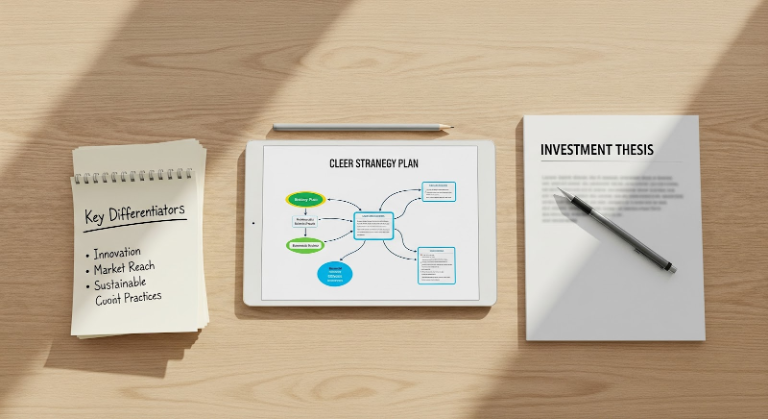
A strong investment strategy stands out through clarity, focus, and real-world evidence.
3. Legal & Regulatory Compliance
Compliance is no longer a back-office function — it is a reputation protector. LPs will rigorously examine whether a fund operates within the correct legal structures, maintains high levels of “regulatory hygiene,” and possesses an immutable audit trail. Weakness here is often a non-negotiable deal-breaker.
What LPs look for:
- Fund Formation & Domicile: Is the entity properly established, documented, and in good standing across all jurisdictions (onshore and offshore)?
- Regulatory Status: Are required registrations and filings (e.g., SEC, FCA, AIFMD, MAS) current, accurate, and submitted on time?
- AML/KYC Rigor: Does the firm have robust, automated processes for investor verification, UBO (Ultimate Beneficial Owner) tracing, and real-time sanctions screening?
- Policy-to-Practice Alignment: Are compliance manuals and codes of ethics actually embedded into daily workflows, or do they only exist on paper?
- Instant Auditability: Can the GP produce a time-stamped, digital audit trail of all compliance activities and approvals on demand?
Where GPs often stumble:
- Operational Drag: Relying on fragmented, manual systems (spreadsheets and separate databases) that create data silos and human error.
- The “Policy Gap”: Having policies that aren’t integrated into the firm’s technology, leading to inconsistent application.
- Retrieval Delays: Taking days or weeks to produce compliance records during a due diligence review — a major red flag for institutional investors.
- Static Monitoring: Failing to perform ongoing monitoring, particularly for cross-border investors in shifting regulatory environments.
How to prepare:
- Centralize the “Legal Bible”: Keep all formation and regulatory documentation in a secure, centralized digital hub for immediate access.
- Run Mock ODD Reviews: Perform regular internal audits to identify gaps in your documentation or filings before an LP finds them.
- Adopt Compliance Technology: Move away from analogue tracking. Use platforms that automate routine checks and maintain a regulator-ready record of activity.
- Modernize for Scale: Standardize your AML/KYC workflows to handle complex entity types across jurisdictions.
According to a recent PwC EMEA AML Survey, 55% of firms plan to allocate more than 10% of their AML budget to digital tools. This highlights a clear trend: institutional LPs now expect GPs to use modern infrastructure that can scale as quickly as the fund grows.
4. Fund Economics & Operating Model Transparency
LPs want confidence that the fund’s economics are fair, transparent, and most importantly, aligned with their interests. While strong returns are the goal, they can be overshadowed by opaque fee structures, excessive expenses, or an operating model that looks unsustainable.
What LPs look for:
- Fee Structure & “Market-Standard” Pricing: Are management fees and carried interest clearly explained and in line with current industry benchmarks?
- Alignment of Interests (“Skin in the Game”): Is the GP making a meaningful capital commitment alongside the LPs? How are incentives structured to prioritize long-term performance over “asset gathering”?
- Expense Allocation Integrity: Is there a clear, documented policy separating Management Company (ManCo) expenses from Fund-level expenses?
- Operational Leverage: Does the firm have the infrastructure to manage growth without increasing operational risk or overhead?
Where GPs often stumble:
- Opaque Expense Policies: Failing to clearly define what the fund pays for vs. what the GP pays for — a major red flag during SEC/FCA-style audits.
- The “Lean” Trap: Operating so lean that LPs worry about Key Person Risk or the firm’s ability to handle a complex regulatory crisis.
- Hidden “Fee Offsets”: Lacking transparency on whether transaction or monitoring fees from portfolio companies are credited back to the LPs.
- Inconsistent Disclosures: Providing different economic terms to different investors without a clear Most Favored Nation (MFN) framework.
How to prepare:
- Formalize an Expense Allocation Policy: Document exactly how costs are split and be ready to defend it with “market-standard” logic.
- Standardize the “Economic Pack”: Create a clear summary of fees, GP commitments, and carry waterfalls that can be shared consistently.
- Showcase Institutionalized Budgeting: Show LPs a roadmap of how you will scale your team and tech (like Blackbird) as the fund grows.
- Be Benchmark-Ready: Know the average fees for your “vintage” and strategy. If you are more expensive, be ready to prove that your Alpha justifies the premium.
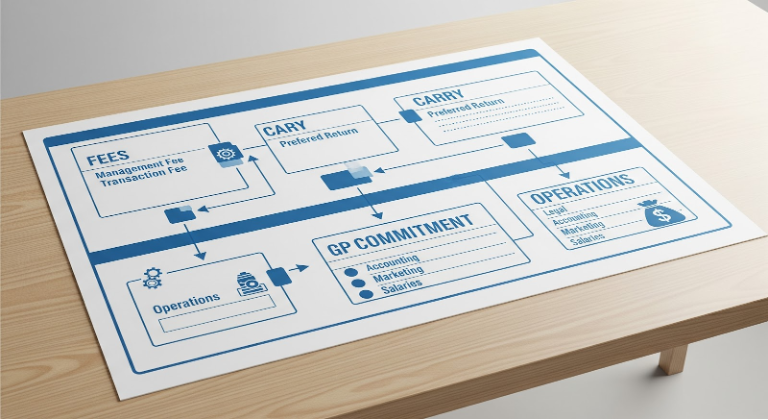
Clear fund economics starts with a blueprint investors can actually read.
5. Operational Infrastructure & Technology
LPs don’t just invest in a strategy — they invest in the engine that supports it. In CSC’s 2025 LP survey, 85% of investors stated that poor fund administration had negatively impacted their future allocation decisions. Even a compelling investment thesis can crumble under scrutiny if a GP relies on a “patchwork” of spreadsheets that creates operational drag and risk.
What LPs look for:
- Operational Resilience: Does the firm possess a modern, integrated tech stack for compliance, reporting, and investor relations?
- Data Integrity & Single Source of Truth: Are records centralized and audit-ready, or does the firm rely on manual entry across disconnected silos?
- Scalability & Tech-to-Headcount Ratio: Can the current infrastructure support a 2x or 5x increase in AUM or investor volume without a proportional (and expensive) increase in back-office headcount?
- Cyber Hygiene & Data Privacy: Is investor and portfolio data safeguarded by institutional-grade controls (e.g., encryption, MFA, and SOC2/GDPR alignment)?
Where GPs often stumble:
- Excel-Based Foundations: Over-reliance on spreadsheets that lack version control, audit trails, and security.
- The Silo Effect: Using tools that don’t talk to each other, leading to “data fragmentation” and human error during manual transfers.
- Lack of Disaster Recovery (DR) Planning: Weak implementation of controls or limited documentation on how the firm handles data breaches or system outages.
- Audit Sluggishness: Failing to produce specific records (like historical KYC approvals) within minutes during an ODD interview.
How to prepare:
- Conduct an Operations Audit: Map your end-to-end workflows — from onboarding to reporting — and identify every manual bottleneck.
- Prioritize One-Click Auditability: Invest in compliance automation platforms that centralize records and maintain a time-stamped, immutable audit trail.
- Formalize Your InfoSec Policy: Document your cybersecurity controls and ensure they are tested regularly via penetration tests or mock scenarios.
- Stress-Test for Growth: Simulate a high-volume onboarding event or a complex cross-border fund launch to see where your current infrastructure reaches its breaking point.
6. ESG & Risk Management
Environmental, Social, and Governance (ESG) considerations, alongside broader operational risk oversight, are no longer optional extras. LPs expect GPs to demonstrate how they mitigate traditional risks (operational, financial, and cyber) while integrating ESG factors into their investment lifecycle. In fact, a recent PwC global survey found that 70% of PE houses rank ESG among their top three value drivers for deals.
What LPs look for:
- ESG Materiality: Is there a clear policy on how ESG factors are considered during due diligence and portfolio monitoring?
- Risk Framework & ERM: Is there a documented Enterprise Risk Management (ERM) process for identifying and mitigating risks across the fund’s operations?
- Business Continuity & Resilience: Does the GP have a tested Business Continuity Plan (BCP)?
- Regulatory Alignment: How does the GP track evolving requirements like the SFDR (Europe) or emerging SEC climate disclosures?
- Data-Backed Transparency: Are ESG claims supported by verifiable data, or are they high-level marketing promises that carry greenwashing risk?
Where GPs often stumble:
- Check-the-Box ESG: Publishing high-level commitments without embedding them into the actual IC memos.
- The Silo Problem: Treating Risk and ESG as independent “compliance chores” rather than integrated parts of the investment strategy.
- Ignoring Operational Risk: Focusing solely on “deal risks” while overlooking vendor risk (e.g., your fund admin’s security) or internal data protection.
- Reporting Fatigue: Struggling to reconcile different reporting standards (e.g., PRI, SASB, TCFD), leading to inconsistent or late data for LPs.
How to prepare:
- Formalize a Materiality Map: Define which ESG factors actually matter for your specific strategy (e.g., carbon for infrastructure, diversity for VC).
- Adopt Standardized Frameworks: Align your reporting with frameworks LPs already use, such as SFDR, PRI, or SASB, to ensure your data is LP-ready.
- Battle-Test Your BCP: Don’t just write a Risk Policy — simulate a scenario (like a key-person departure or a system outage) and document the result.
- Evidence-Based Reporting: Shift from “aspirations” to “evidence.” Be ready to share case studies where an ESG or Risk assessment changed an investment decision.
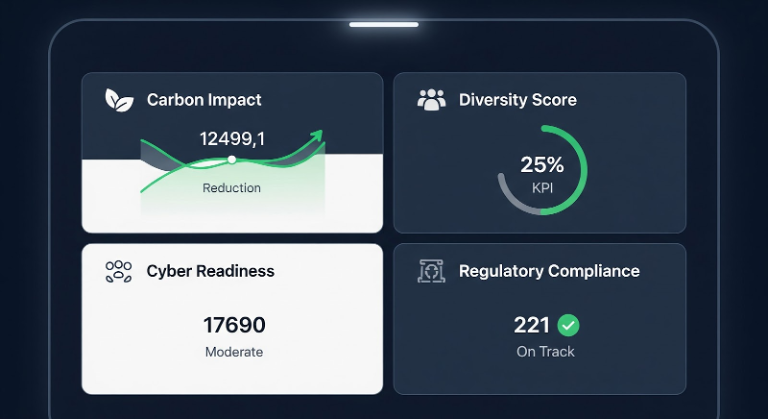
LPs want proof of impact — not just good intentions.
The bottom line: By preparing across these six areas, firms can face “GP due diligence” from LPs with confidence.
How Can Blackbird Help?
Not every aspect of this GP due diligence checklist can be solved with technology. LPs will always assess your strategy, team, and culture at a human level. However, the most resource-intensive parts of due diligence — legal, regulatory, and operational readiness — are areas where the right infrastructure makes the difference. Instead of a manual scramble and a smooth, you and your LPs get a regulator-ready process.
Blackbird transforms your middle office from a cost center into a competitive advantage. Our platform orchestrates KYC, AML, and LP due diligence within a unified digital workspace. For GPs, this delivers:
- Accelerated Onboarding: Move from commitment to capital call faster, without compromising on jurisdictional compliance.
- Real-time Oversight: Automated sanctions and watchlist monitoring via World-Check, coupled with customizable rulesets that adapt to your fund’s specific regulatory perimeter.
- Immutable Audit Trails: Provide LPs with point-in-time records that demonstrate your compliance processes are rigorous, consistent, and institutional-grade.
By streamlining the operational complexities of the investor lifecycle, Blackbird helps you present a professional “front door” to your investors — allowing you to focus on strategy, performance, and relationships.
Want to learn more? Visit our product page or schedule a quick demo with our team.
About the Author
Linoy Doron is a Content Strategist at Blackbird, where she translates complex fintech and compliance topics into clear, actionable insights. With a strong background in technology, SaaS, and UX, she crafts narratives that connect product value to the real needs of asset managers in the private market.